Contact Us Anytime! USA: +1 (551) 2485809 | India: 1800 102 1532 (Toll-Free) | Singapore: +65 6677 3658 | info@iarminfo.com

Penetration Testing Services

Find vulnerabilities before attackers do

Expert-Led Penetration Testing for Real-World Security

IARM is a CREST-accredited penetration testing company providing web application, mobile, API, cloud and network penetration testing. Our manual, human-led approach finds the business logic flaws, authorization bypasses and attack chains that automated scanners miss, and gives developers reports they can act on.
200+
customers served
8000+
applications tested
24
countries

CREST accredited penetration testing company

CREST accredited company
70%
manual testing
46%
Why scanners alone are not enough

46% of application-level security risks are not covered by SAST and DAST tools alone.

Adapted from NIST research and S-SDLC analysis.
Scanner-based testing
Good for baseline checks


Fast
Automated runs finish in hours


Low cost
Cheap, but shallow coverage


Finds known issues
Signature-based, blind to logic flaws
IARM human-led penetration testing
Built to find what attackers actually exploit


Business logic testing
How your workflows can be abused


Threat modeling
Attack scenarios ranked by impact


Exploit validation
Findings proven, not theoretical


Proof of concept
Evidence your team can reproduce


Developer-friendly reporting
Clear fixes, ready for tickets
Already running scanners? A penetration test finds what they cannot.

Get a Proposal

Our Penetration Testing Services

Scoped to your stack and delivered by senior testers, whether you need a one-off compliance assessment or an enterprise-wide program.
Web and Mobile Application Penetration Testing
Secure web, mobile, SaaS and enterprise applications against real-world attacks.
WebMobileSaaS
API Penetration Testing
Validate authentication, authorization, data exposure and API abuse scenarios.
RESTGraphQLAuth
Cloud Penetration Testing and Security Assessment
Find cloud misconfigurations, IAM weaknesses, exposed assets and attack paths.
AWSAzureGCP
Network Penetration Testing
Assess internal and external network defenses, infrastructure security and segmentation controls.
InternalExternalSegmentation
Choose the testing approach that fits your risk
 
Black box
Simulates a real-world attacker with no prior knowledge.
Best for: static websites
 
Grey box
Combines limited access with an attacker’s view for faster, deeper analysis.
Best for: standard applications
 
White box
Full security validation with source code, architecture and design visibility.
Best for: high-end applications with source code review
Penetration testing for compliance and customer trust
Our penetration testing reports support audits and security questionnaires, with evidence your auditors and customers can rely on.
SOC 2PCI DSSISO 27001Vendor security reviewsCustomer security due diligence

Why Organizations Choose IARM for Penetration Testing

Scanners find known issues. Attackers exploit how your application actually behaves. We test both, with experts leading the work.
70% manual security testing
30% automated
Led by experts

Business logic testing
Authentication testingAuthorization testing
API abuse testingThreat modeling
Attack path analysisProof-of-concept validationExploit chaining

Supported by tools

Vulnerability discovery
Security configuration validation
Attack surface identification
Baseline technical verification
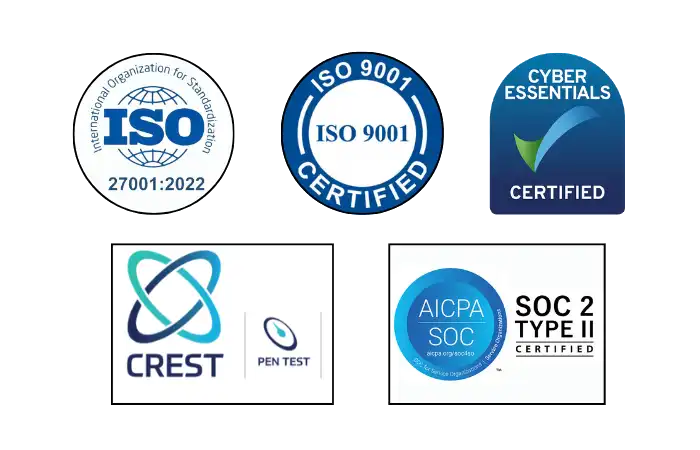
Our Accreditations

IARM security accreditations and licenses

Licensed Cybersecurity Service Provider by the Singapore CSRO
What attackers exploit, and we test for
Business logic flaws
Workflow manipulation tools cannot see
Authorization bypasses
Privilege escalation across roles and tenants
Account takeover
Plus transaction abuse
API abuse
Multi-step exploit chains
What you get with every engagement
 
CREST-accredited testing
Aligned to globally recognized methodologies
 
Threat modeling included
Attack scenarios and architectural risks, not an add-on
 
Proof-of-concept validation
Every critical finding demonstrated, not theoretical
 
Developer-friendly reports
Reproducible attack paths, evidence and clear fixes
 
Independent quality review
Every report checked for accuracy before delivery
 
Enterprise-scale experience
Startups to hundreds of APIs and complex cloud

Reports Your Team Can Act On

Every engagement ends with deliverables for executives and developers alike.
 
Executive summary
Business impact, security posture, critical risks and strategic recommendations.
 
Technical report
Detailed findings, attack paths, screenshots, evidence, risk ratings and fixes.
 
Threat model summary
Threat scenarios, attack surface analysis and prioritized risk pathways.
 
Remediation validation
Optional retesting to verify every identified vulnerability is closed.
Shipping weekly? Test continuously.
Annual penetration testing cannot keep up with agile, DevOps and CI/CD release cycles. Continuous penetration testing keeps your security validated as your product changes.

Early risk identificationContinuous security validationReduced security debtFaster remediation cyclesImproved compliance readiness

Penetration Testing FAQs

Answers to the questions buyers ask most before choosing a penetration testing provider.
Still have questions?
Talk to a penetration testing expert about your scope.

Talk to an Expert

What is penetration testing?+
Penetration testing is an authorized, simulated attack on your applications, APIs, cloud environment or network to find and prove exploitable vulnerabilities before real attackers do.
What is the difference between a vulnerability scan and a penetration test?+
A vulnerability scan is an automated check that finds known weaknesses such as missing patches and misconfigurations. A penetration test goes further: security experts manually test business logic, authorization and attack paths, safely exploit vulnerabilities and prove their impact with proof-of-concept evidence.
Most organizations benefit from both, but only a penetration test shows what an attacker could actually do.
How much does penetration testing cost?+
Penetration testing is priced by scope, not at a fixed rate. The main factors are the number of applications, APIs, cloud accounts or network segments, the size and complexity of the environment, the testing approach (black, grey or white box), the amount of manual testing and whether you need retesting or continuous testing.
IARM prepares a detailed proposal after a scoping discussion, so you pay for the coverage you actually need.
Does penetration testing support SOC 2, PCI DSS and ISO 27001 compliance?+
Yes. Penetration testing is widely used to support SOC 2, PCI DSS and ISO 27001 programs, as well as vendor security reviews and customer security due diligence. Confirm the exact requirements with your auditor or framework when defining scope.
Why is business logic testing important?+
Most automated security tools are designed to identify known vulnerabilities. However, they cannot understand how your application is intended to function from a business perspective.
Business logic testing focuses on how users, workflows, permissions, transactions and application processes interact in real-world scenarios. Attackers often exploit flaws in these workflows to bypass controls, escalate privileges, manipulate transactions, access unauthorized data, or perform actions the application was never intended to allow.
This is why business logic vulnerabilities are among the most critical security weaknesses and are frequently missed by automated tools. At IARM, approximately 70% of our penetration testing effort is dedicated to manual testing, including business logic validation and real-world attack scenario simulation.
Why is manual penetration testing important when security scanners are available?+
Automated tools are effective at identifying known vulnerabilities, misconfigurations and common security weaknesses. However, they typically cannot identify complex business logic flaws, authorization issues, workflow abuse scenarios or multi-step attack paths.
At IARM, approximately 70% of testing activities are performed manually by security specialists to validate real-world attack scenarios and identify vulnerabilities that automated tools often miss.
Why do penetration testing providers quote significantly different prices?+
Not all penetration tests are performed using the same methodology. Many low-cost assessments rely heavily on automated vulnerability scanners and provide reports with limited manual validation.
Comprehensive penetration testing involves manual security analysis, business logic testing, exploit validation, proof-of-concept development, threat modeling and quality review of deliverables. When comparing providers, evaluate the testing methodology, reporting quality, manual testing effort and expertise of the testing team rather than price alone.
What should we look for when selecting a penetration testing provider?+
Look beyond pricing and automated scanning capabilities. Key factors include:
Experience with similar environments
Manual testing expertise
Quality of reporting
Clear remediation guidance
Proof-of-concept validation
Testing methodology
Independent quality assurance processes
Ability to handle complex and large-scale engagements
The value of a penetration test comes from the quality of analysis and actionable findings, not simply the number of vulnerabilities reported.
Why do developers prefer IARM’s penetration testing reports?+
Security findings are only valuable when developers can understand and remediate them effectively. Our reports include technical evidence, proof-of-concept validation, screenshots, reproduction steps, risk explanations and practical remediation guidance.
We help development teams understand not only what the vulnerability is, but also why it exists and how to fix it securely.
How is continuous penetration testing different from annual penetration testing?+
Annual penetration testing provides a point-in-time assessment of security risks. However, modern applications frequently change through new releases, APIs, cloud deployments, integrations and feature enhancements.
Continuous penetration testing aligns with Agile, DevOps and DevSecOps practices by validating security throughout the software development lifecycle. This helps organizations identify vulnerabilities earlier, reduce security debt and maintain a stronger security posture between formal assessment cycles.
Can penetration testing be integrated into our DevOps or DevSecOps process?+
Yes. Security testing should not be a one-time activity performed before an audit or release. Many organizations integrate penetration testing into their DevOps and DevSecOps practices through continuous security validation, helping identify risks earlier and reducing remediation costs.
This is especially valuable for SaaS applications with frequent releases.
How do you validate that identified vulnerabilities are real?+
Every high and critical finding is manually validated before it is reported. Where appropriate, our reports include:
Technical evidence
Screenshots
Proof-of-concept demonstrations
Reproduction steps
Risk explanation
This helps reduce false positives and provides confidence that reported issues represent actual security risks.
How long does a penetration testing engagement typically take?+
The duration depends on the scope and complexity of the environment being tested.
Small web applications: 3-5 business days
Medium-sized applications and APIs: 1 week
Enterprise applications and cloud environments: 2-4 weeks
Large multi-application engagements: Custom timelines
A detailed testing plan is shared during project initiation to ensure expectations, milestones and deliverables are clearly defined.

Ready to Validate Your Security?

For nearly a decade, IARM has helped 200+ customers across 24 countries strengthen application, API, cloud and network security. Tell us your scope and get a proposal.

Resource Spotlight

CREST penetration testing vendors

Press Release

IARM achieves CREST accreditation for pentesting

Read More
Software Development

Success Story

Largest Penetration Testing Case Study

Read More
100 Security Tips from Expert Penetration Testers for Software Developers

blog

100 Security Tips from Expert Penetration Testers

Read More
We are using cookies to give you the best experience. You can find out more about which cookies we are using or switch them off in privacy settings.
AcceptPrivacy Settings

Iarmlogo

  • We Value your Privacy
  • Necessary
  • Functional
  • Analytics
  • Performance
  • Advertisement

We Value your Privacy

“We use cookies to help you navigate efficiently and perform certain functions. You will find detailed information about all cookies under each consent category below. 

The cookies that are categorized as “Necessary” are stored on your browser as they are essential for enabling the basic functionalities of the site. 

We also use third-party cookies that help us analyze how you use this website, store your preferences, and provide the content and advertisements that are relevant to you. These cookies will only be stored in your browser with your prior consent. 

You can choose to enable or disable some or all of these cookies but disabling some of them may affect your browsing experience.” 

Necessary

Necessary cookies are required to enable the basic features of this site, such as providing secure log-in or adjusting your consent preferences. These cookies do not store any personally identifiable data. 

Functional

Functional cookies help perform certain functionalities like sharing the content of the website on social media platforms, collecting feedback, and other third-party features. 

Analytics

Analytical cookies are used to understand how visitors interact with the website. These cookies help provide information on metrics such as the number of visitors, bounce rate, traffic source, etc. 

Performance

Performance cookies are used to understand and analyze the key performance indexes of the website which helps in delivering a better user experience for the visitors. 

Advertisement

Advertisement cookies are used to provide visitors with customized advertisements based on the pages you visited previously and to analyze the effectiveness of the ad campaigns.